
 Wednesday, 18th March, 2026
Cory sets out plan to strengthen energy security by recycling heat
- A second spike in gas prices in just five years means that we must redouble our efforts to reduce our reliance on imported fuels
- Cory and Stonehaven propose a novel solution: recycling heat from our rubbish
- A new paper calls for a Thames Tideway-type rule to making investing in the pipes necessary possible
Today Cory and Stonehaven have published a new paper that seeks to solve an extremely pressing challenge. Britain is once again staring down the barrel of increases in the costs of fossil fuels, following the price spikes that arose in the wake of the Russian invasion of Ukraine. Gas prices have nearly doubled within two weeks.
For businesses looking to manage their costs and ordinary people worried about the cost of living, this feels like a familiar disaster. While an increase in renewable generation means that Britain is marginally less exposed to these prices than it was in 2022, if the conflict in Iran continues, significantly higher prices will be increasingly baked into bills.
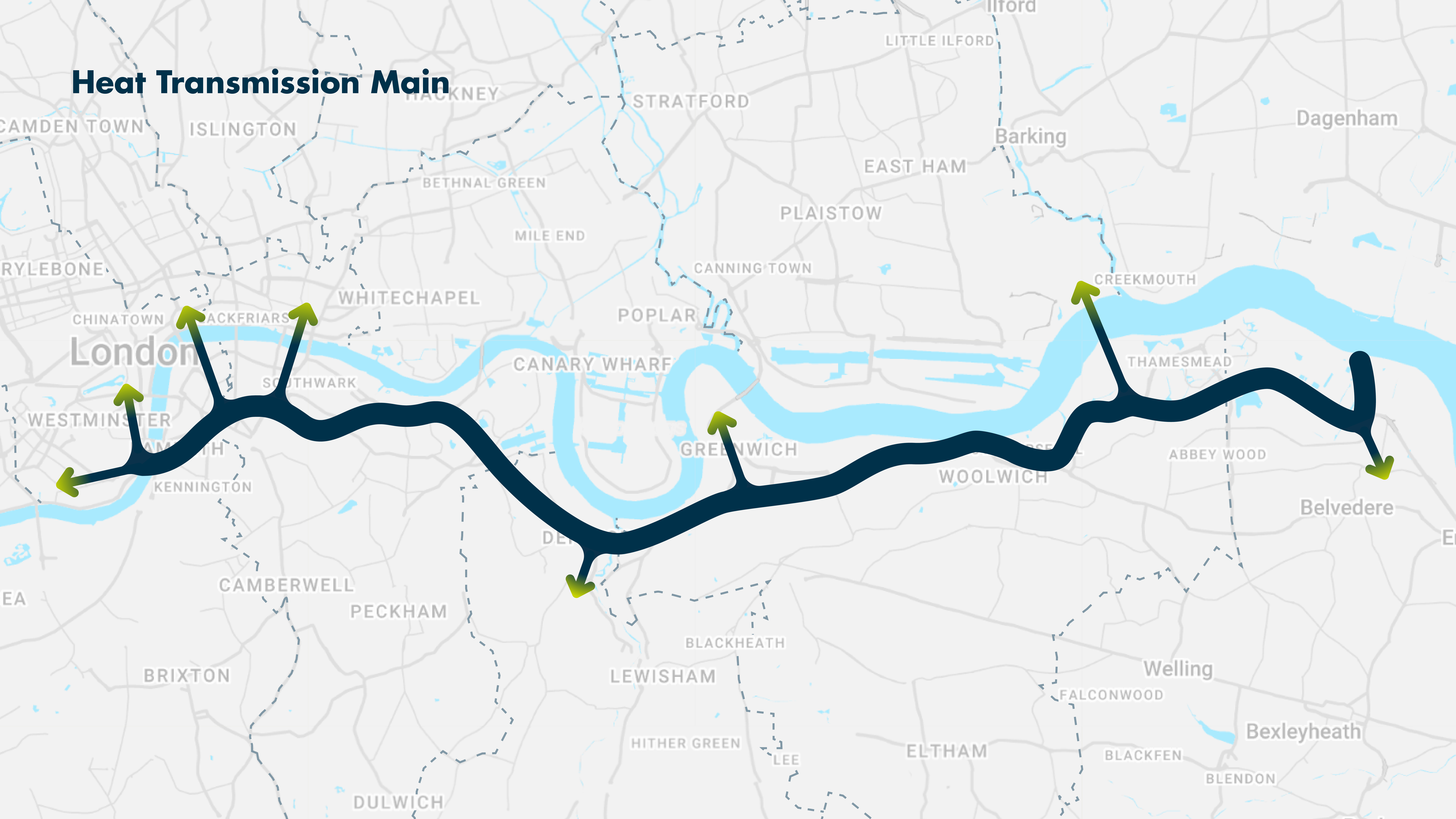
The paper proposes that we tackle this by using the heat already generated from burning our own rubbish in facilities outside of town centres, to warm our homes and offices. While the waste treatment plants exist, new infrastructure will be needed to transport the heat from energy from waste facilities into urban areas and connect it to building heating systems.
This is secure low-carbon heat and an approach already used across Europe and Asia. For instance, in Denmark, heating prices rose by 29% between 2015 and 2023, compared with a 75% increase in the UK over the same period. Given the likelihood of a price cap rise in July, the need for action is abundantly clear.
The paper suggests that this new infrastructure – long-distance heat transmission mains – be financed using a similar approach as the successful Thames Tideway project. Thames Tideway saw a bespoke vehicle set up to enable infrastructure providers to deliver a lower cost option, with costs ultimately recovered from Thames Water customers.
David Carter, Managing Director – Heat at Cory Group, said: “From 2027 Cory’s Riverside facility will treat more than one-third of London’s residual waste, which would otherwise go to landfill. This process creates enough waste heat for 400,000 homes. Cory is actively developing a long distance “Strategic Heat Main” which would enable this heat to be used in homes and businesses. The new paper sets out a way this could be financed, helping to unlock c.£5bn in investment across this project and onward distribution systems. It would also provide a template for other cities across the UK.”
Adam Bell, Partner, Energy at Stonehaven, said: “Gas crises are happening with increasing frequency as globalisation breaks down. In this context, it is hard to envisage a more reliable source of heat than our own rubbish. Government must act to ensure that when the next crisis hits our cities are secure.”
Aaron Gould, CEO of Association for Decentralised Energy, said: “Heat networks are an essential part of how we'll wean ourselves off gas. Ensuring that the heat provided by these networks is as cost effective as possible is critical. This paper presents a viable route for financing the Strategic Heat Mains necessary to deliver cheap heat from major heat sources”
Louise Shooter, Head of Heat Decarbonisation at EnergyUK, said: “Getting off gas means we need to look to decarbonise heat wherever – and however – we can. Building infrastructure like Strategic Heat Mains is therefore an important way to help protect customers from the price volatility of fossil fuels which feeds through to their bills, by enabling the development of low-carbon heat networks in city centres. The approach taken in this paper could help achieve this goal.”
ENDS